Search

Loading...

24 May 2013

CALL FOR ARTICLES: Comparative Legal History, the official journal of the European Society for Comparative Legal History

Publication of the first issue of Comparative Legal Historythe official journal of the European Society for Comparative Legal History (ESCLH), is imminent.


Published with Hart Publishing (UK), Comparative Legal History is an international and comparative review of law and history and welcomes scholarly submissions in the English language:

Its articles explore both internal legal history (doctrinal and disciplinary developments in the law) and external legal history (legal ideas and institutions in wider contexts). Firmly rooted in the complexity of the various Western legal traditions worldwide, it also provides a forum for the investigation of other laws and law-like normative traditions around the globe. Scholarship on comparative and trans-national historiography, including trans-disciplinary approaches, is particularly welcome. 

The editors cordially invite contributions: articles, review articles and book reviews.

The website will be updated shortly, but our Guidelines for Contributors are already posted and should be reviewed before submitting. A sample article, David M Rabban' s 'American Responses to German Legal Scholarship: From the Civil War to World War I' (2013) 1 Comparative Legal History 13, is also available for downloading.

Finally, note that a special arrangement between the ESCLH and Hart has been made to ensure that ESCLH membership fees include a subscription to Comparative Legal History.

Spread the word. 

21 May 2013

BOOK: Lyall on the Irish House of Lords - A Court of Law in the Eighteenth Century

Clarus has announced the publication of Andrew Lyall's The Irish House of Lords: A Court Of Law In The Eighteenth Century.

About

The Irish House of Lords: A Court Of Law In The Eighteenth Century is a unique work which examines the role of this final court of appeal between the years 1783 ‘til the Act of Union in 1800 placing the Court in the context of the political and constitutional history of the time. Utilising a broad range of sources, including recent and relevant academic studies as well as rare law reports and archives this book traces, in great detail, the importance of particular decisions of the Irish lords and what they tell us about penal laws and other phenomena of Irish life at that time.

This comparative analysis of decisions of the Irish and British lords, in the context of disagreements and disputes about jurisdiction between the islands of Ireland and Great Britain, builds on our current understanding of the issues involved and brings to it the fresh perspective of a scholar who understands the subtleties of particular legal decisions as well as their broader political reception. The author also examines the judges of the court, their individual contributions and judicial attitudes. This insight to the personalities and lives of some of the leading judges and others who were involved in key decisions in the eighteenth century brings an added dimension that many readers will find attractive and that supplements our existing knowledge of those individuals.

Some of the material discussed is relevant to a wider constitutional debate, one that stretches across the Atlantic Ocean to encompass the American colonies and that deals with the ostensible supremacy of the English King or parliament in the eighteenth century. The ownership of land, the interests of Irish families and the exploration of substantive legal issues in respect to ‘leases for lives renewable forever’ raises issues that might otherwise be overlooked by historians, not least in respect to leases for lives and the Penal laws. The book concludes with a chapter dedicated to the criminal jurisdiction of the Irish House of Lords dealing as it does with trials such as that of Lord Barry of Santry, as well as that of the Earl of Kingston.

17 May 2013

BOOK: Sionaidh Douglas-Scott on "Law after Modernity"


Sionaidh Douglas-Scott, Law after Modernity, Hart Publishing: Oxford, 2013.

Read the editor's abstract:
 
"How can we characterise law and legal theory in the twenty-first century? Law After Modernity argues that we live in an age 'after Modernity' and that legal theory must take account of this fact. The book presents a dynamic analysis of law, which focusses on the richness and pluralism of law, on its historical embeddedness, its cultural contingencies, as well as acknowledging contemporary law's global and transnational dimensions.

However, Law After Modernity also warns that the complexity, fragmentation, pluralism and globalisation of contemporary law may all too easily perpetuate injustice. In this respect, the book departs from many postmodern and pluralist accounts of law. Indeed, it asserts that the quest for justice becomes a crucial issue for law in the era of legal pluralism, and it investigates how it may be achieved.

The approach is fresh, contextual and interdisciplinary, and, unusually for a legal theory work, is illustrated throughout with works of art and visual representations, which serve to re-enforce the messages of the book".


14 May 2013

WEBSITE: ESIL Lecture series


The European Society of International Law published a number of lectures on its website, most of them in audiovisual form (cf. Youtube-channel). Some of them  be of use for legal historians:

  • "Histories of International Law and Empire" (Anne Orford) (link)
  • "Discourse Theory and International Law: An Interview with Professor Jürgen Habermas" (Interview by Armin Von Bogdandy at the MPI Heidelberg) (link)


E-JOURNAL: New issue MPI for European Legal History Research Paper Series II (2013), No. 2 (May)

(image source: rg.mpg.de)


The MPI for European Legal History in Frankfurt has released a new issue of its online Research Paper Series on SSRN.

Contents:
  • Heinz Mohnhaupt, "'Historia literaria iuris' Beispiele juristischer Literaturgeschichten im 18, Jahrhundert (Historia Literaria Iuris: Examples of Juridical Literary Histories in the 18th Century)" (PDF)
 Abstract:
Die "Historia literaria“ ist ein Teil juristischer Wissenschaftsgeschichte. Sie dokumentiert die Ordnung der wachsenden Wissensbestände angesichts einer überbordenden Bücherproduktion seit dem 17. Jahrhundert, die pädagogischen Aufgaben für den universitären Rechtsunterricht sowie die Bildung von wissenschaftlichen Disziplinen und Hierarchien. Unter den einzelnen Literaturgattungen erlangen die Enzyklopädien eine besondere Bedeutung. Die juristische Literaturgeschichte wird als Voraussetzung für die Fortentwicklung der Rechtsdogmatik gewertet.

The article "Historia literaria iuris. Examples of juridical literary histories in the 18th century“ evolved in the context of a colloquium on the various disciplines in the "Historia literaria“ which was hosted by the Institute of German Philology at the University of Munich in October 2007. On the basis of the secondary literature in the individual disciplines, the history of their development and the separation of fields of study as a whole were investigated. The theme was the function of the "Historia literaria“ in presenting and ordering knowledge, its pedagogical functions, the construction of hierarchies and its usefulness for investigating the history of knowledge and scholarship.

At the centre of the present study lie the juridical encyclopedias of the 18th century and the scholarly practice of the "mos gottingensis“ of the University of Götttingen, which were fundamentally influenced by the "historia literaria iuris seu iurisprudentiae“. The purpose of this literary genre was to bring the expanding field of knowledge into a readable and instructive format. This led to legal science as a whole splintering into legal sub-disciplines. Thereby a process of differentiation was set in motion within the individual legal subjects which led to the creation of basic and subsidiary fields of scholarship. Bibliographies of individual legal subjects and dogmatic legal questions were the result. A perennial problem was created by the questions and criteria surrounding the selection of books and titles which documented the academic discussion and which led to typologies within the bibliographies themselves
  • Peter Collin, "Judging and Conciliation – Differentiations and Complementarities" (PDF)
Abstract:
Diverse forms of conflict resolution were established throughout the course of history: state and non-state, judicial and extra judicial, consensual, authoritarian, contradictory forms, etc. This contribution ties in with a German tradition of discussions which broaches the issue of the alternatives of conflict resolution under the phrase “Richten oder Schlichten (Judging or conciliation). The paper sketches the life path of this discussion and develops some tentative considerations on how semantic confrontations of “Richten” and “Schlichten” can be made palatable in order to develop research questions and analytical patterns from a historical as well as a current-day perspective. 


JOURNAL: New issues Journal of the History of International Law XV (2013), No. 1 - Law & History Review XXI (2013), No. 2

Two legal history journals published a new issue:


Journal of the History of International Law, vol. XV (2013), No.1:
  • Lea Heimbeck, "Liquidation of State Bankruptcies in Public International Law. Juridification and Legal Avoidance between 1824 and 1907"
  • Jo-Anne Claire Pemberton, "The So-Called Right of Civilisation in European Colonial Ideology, 16th to 20th Centuries"
  • Timothy L. Schroer, "The Emergence and Early Demise of Codified Racial Segregation of Prisoners of War under the Geneva Conventions of 1929 and 1949"
  • Dwight S. Mears, "Neutral States and the Application of International Law to United States Airmen during World War II. To Intern or Not to Intern?" 


Law & History Review, vol. XXXI (2013), No. 2:
  •  Claudio J. Katz, "Protective Labor Legislation in the Courts: Substantive Due Process and Fairness in the Progressive Era"
  •  Logan Everett Sawyer, "Constitutional Principle, Partisan Calculation, and the Beveridge Child Labor Bill"
  •  Amanda Nettelbeck, "“Equals of the White Man”: Prosecution of Settlers for Violence Against Aboriginal Subjects of the Crown, Colonial Western Australia"
  • David Fraser & Frank Caestecker, "Jews or Germans? Nationality Legislation and the Restoration of Liberal Democracy in Western Europe after the Holocaust"
  • Katherine Turck, "“Our Militancy is in Our Openness”: Gay Employment Rights Activism in California and the Question of Sexual Orientation in Sex Equality Law"

13 May 2013

SEMINAR: Decoration of Portuguese Medieval Legal Manuscripts (University of Porto, 15 May 2013)

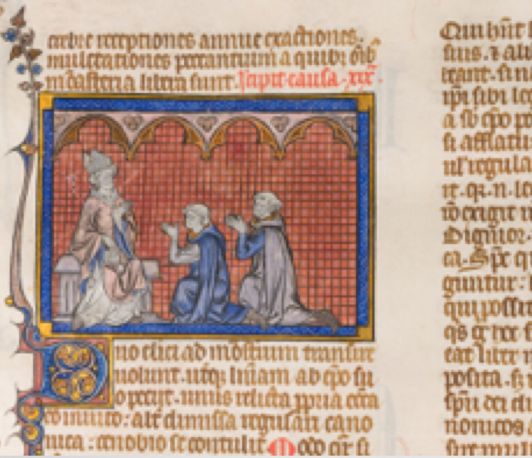
What: Maria Alessandra Bilotta on "A decoração nos códices medievais: tipologia e funções. O caso dos manuscritos jurídicos portugueses". 
WhereSala do Departamento de Filosofia, Gabinete de Filosofia Medieval / Instituto de Filosofia, Faculdade de Letras da Universidade do Porto. 
When: 15 May 2013, 2:30 pm.  

All information HERE

COLLOQUIUM: Criminology and Legal History discussed with David Garland at the University of Ferrara (16 May 2013)

What: David Garland on "Faucault's geneaology and the study of criminology" (a Colloquium on Criminology and Legal History)
Where: Dipartimento di Giurisprudenza - Sala Consiliare, University of Ferrara
When: 16 May 2013, 10:00 am 

BOOK: David Garland (NYU) at the University of Ferrara (13 May 2013)

What: Presentation of the book by DAVID GARLAND: La pena di morte in America. Un'anomalia nell'era dell'abolizionismo, Il Saggiatore, 2013. 
Where: Dipartimento di Giurisprudenza - Sala Consiliare, University of Ferrara
When: 13 May 2013, 4:00 pm 

More information on the book (in Italian) here

The presentation will be coordinated by Michele Pifferi while the book will be discussed by Stefano Canestrari, Baldassarre Pastore and Andrea Pugiotto.

David Garland, "Arthur Vanderbildt" Professor of Law, Prof. of Sociology at the NYU School of Law and Visiting professor at the Dipartimento di Giurisprudenza of the University of Ferrara will be present.   

CONFERENCE: Diffusion: An International, Interdisciplinary Conference on Comparative Law (Lausanne, 3-4 June 2013)

What: DIFFUSION: An International Interdisciplinary Conference on Comparative Law, co-sponsored by the Swiss Institute of Comparative Law and Juris Diversitas 
Where: Swiss Institute of Comparative Law, Lausanne 
When: 3-4 June 2013

Deadline for registration: 15 May 2013


To read the full program and all the details for registration click HERE

11 May 2013

CALL FOR PAPERS: FRAMING PREMODERN DESIRES. Between Sexuality, Sin and Crime (Turku, 4-5 April 2014)

What: International Colloquium FRAMING PREMODERN DESIRES. Between Sexuality, Sin and Crime
WhereTurku Centre for Medieval and Early Modern Studies, Finland 
When: 4-5 April 2014


Deadline: 30 June 2013
Sexuality is inevitably closely linked with wellbeing, individual identity and the very beginning of life. In premodern cultures sexual desires were perceived, described and encountered in a variety of ways. The praise concerning procreation, as well as sexual acts within the frames of marital institutions and between the ones in love was very much present in the surviving sources. At the same time, sexual desires belonged to the most regulated areas of human behavior bridled by religious and legal authorities. 
Recently, the scholarly field of the history of sexuality has laid a special emphasis on the multiple varieties in understanding past sexual desires in a particular time and place. We will focus on exploring the localities and temporalities of sexuality, the visibility and invisibility of sexual desires, as well as the intersections of sexuality and moral offences in late medieval and early modern societies (13th–18th centuries). 
The colloquium seeks to deepen our understanding of the varieties of sexuality and sexual practices by bringing together experts in the disciplines of cultural, legal and medical history, as well as literature, languages, art, archaeology, and religion. We especially welcome multidisciplinary research approaches and studies emphasizing cross- and transcultural perspectives, as well as non-western histories of sexualities and moralities.

Confirmed Speakers:
 - Faramerz Dabhoiwala (Oxford, UK)
- Jonas Liliequist (Umeå, Sweden)
- Garthine Walker (Cardiff UK)
- Dror Zeevi (Ben-Gurion University of Negev, Israel)

Call for Papers
The colloquium is open for scholars in all stages of academic life. Early career researchers are especially encouraged to send proposals. Papers may discuss but do not have to restrict themselves to the following themes:
 - sexual practices, customs and manners
- sexual desire as sin or crime
- secular and religious policies towards immorality
- medical attitudes towards sexuality and health
- sexuality and gender in popular culture
- the materiality of sexuality and bodiliness

We look forward to receiving individual abstracts (max. 300 words) or suggestions for sessions of 3–4 papers by 30 June 2013. Proposals should be sent to

Proposals for papers of 20 minutes will be evaluated by the organizing committee and the approval will follow in August.
The conference language is English. Selected papers and lectures will be published after the conference. Travel and accommodation costs will be covered by the participants. A small colloquium fee will cover lunches and refreshments.

Organization committee: Meri Heinonen, Eva Johanna Holmberg, Marjo Kaartinen, Satu Lidman, Tom Linkinen, Kirsi Salonen, Mari Välimäki

Turku is the oldest town in Finland. By the river Aura you can sense the medieval atmosphere and visit interesting museums, shops and restaurants. To find out more about accommodation, transportation and the university, check out the links below:

For more information about the conference, contact

The conference web page will be opened in May:

On the behalf of the organizing committee,
Satu Lidman

09 May 2013

CONFERENCE: Law, Lexica and Libraries (UCL, 20-22 June 2013)

What: Volterra-Festus colloquium “Law, Lexica and Libraries: Italy and Francia between the sixth and eleventh centuries”
Where: History Department, University College London, Rooms G.09/G.10, House 26 Gordon Square
London WC1H 0AG (UCL Maps and Routefinder:
http://www.ucl.ac.uk/find-us/ )
When: 20-22 June 2013

Deadline for registration: 17 June 2013


ProgrammeThursday 20 June14.00 Welcome and introduction, Michael Crawford
14.30 Benet Salway, “The Carolingian Theodosianus”
15.30 John Hessler, “The Roman Law in Ruins: The Paul Krüger Archive at the Library of Congress”
16.30 Tea
17.00 Warren Brown, “On the survival of Roman legal language in Carolingian documentary formulas”
18.00 Abigail Firey, “Heckling from the margins: Italian and Frankish glosses on early canon law”
19.00 Reception

Friday 21 June10.00 Eleanor Dickey, “The legal scenes in the Colloquia of the Hermeneumata Pseudodositheana: who read them?”
11.00 Coffee
11.30 Detlef Liebs, “Late antique and early medieval law lexica”
12.30 Ramón Gutiérrez González, “The afterlife of Verrius and his lexicon”
13.30 Sandwich Lunch
15.00 Simon Corcoran, “Forging the Justinian Code in the early middle ages”
16.00 Antonio Ciaralli, “Manoscritti giuridici tra XI e XII secolo. Osservazioni paleografiche”
17.00 Tea
17.30 Gualtiero Calboli, “Festus and Roman Law (Lex Romana)”
19.00 Colloquium Dinner (if you wish to join the speakers for dinner, please e-mail
s.corcoran@ucl.ac.uk by 20 June)

Saturday 22 June10.00 Wolfgang Kaiser, “The Collectio Gaudenziana”
11.00 Michael Crawford, “From Justinian to Bologna”
12.00 Closing discussion
13.00 Lunch (optional; nearby eatery, aux frais des participants)
*ALL WELCOME*

There is no fee for attending the colloquium but to help us plan refreshments, please register by sending an e-mail to Dr Simon Corcoran (s.corcoran@ucl.ac.uk) by 17 June. Thank you.
Prof. M. H. Crawford
Dr S. J. J. Corcoran
Dr R. W. Benet Salway
The Projet Volterra (Roman law project) & the Festus Lexicon Project
http://www.ucl.ac.uk/history2/volterra
http://www.ucl.ac.uk/history2/research/festus
http://ucl.academia.edu/BenetSalway

08 May 2013

BOOK: Biography of René Cassin by Jay Winter and Antoine Prost (Cambridge, 2013)


Jay Winter (Yale) and Antoine Prost (Paris I) published a new biography of one of the most eminent legal scholars of the 20th century, the French Nobel Prize Winner René Cassin (1887-1976). The book counts 397 pages and is available at Cambridge University Press.

Abstract:
Through the life of one extraordinary man, this biography reveals what the term human rights meant to the men and women who endured two world wars, and how this major political and intellectual movement ultimately inspired and enshrined the Universal Declaration of Human Rights. René Cassin was a man of his generation, committed to moving from war to peace through international law, and whose work won him the Nobel Peace Prize in 1968. His life crossed all the major events of the first seventy years of the twentieth century, and illustrates the hopes, aspirations, failures and achievements of an entire generation. It shows how today's human rights regimes emerged from the First World War as a pacifist response to that catastrophe and how, after 1945, human rights became a way to go beyond the dangers of absolute state sovereignty, helping to create today's European project.
 Source: International Law Reporter.

05 May 2013

CONFERENCE: In-Between: Trade and Legal Pluralism in the Era of the Geniza (Tel Aviv University, 29-31st May 2013)

What: The 4th Berg International Conference - Trade and Legal Pluralism in the Era of the Geniza
Where: Tel Aviv University, Faculty of Law 
When: May 29-31st 2013


Organizers: 
Mark R. Cohen (Princeton) and Ron Harris (Tel Aviv)

As Goitein and others have shown, the Cairo Geniza contains a treasure trove of merchants’ correspondence, contracts and dispute resolution records. The merchants whose records are found in the Geniza were involved in trade in the Mediterranean, Middle East and India. They were engaged in long-distance cross-cultural trade. They organized their trade using partnerships, commenda contracts, agency relationships and social networks. A variety of rules and legal systems (that often interacted with each other) governed trade. As members of the Jewish community merchants were subject to Jewish law. The sovereign states in Egypt and other centers of trade applied Muslim law. Some of the organizational forms used by these Jewish merchants were borrowed from Muslim law and practices. Some of their destination markets were subject to Christian and Hindu laws. The Geniza documents thus open a window on a rich and complex world of legal pluralism, in which merchant practices, social norms and formal law all interacted with each other in many ways.
The proposed conference will bring together legal, economic and general historians of the Geniza and its era. In addition, we plan to invite a few additional scholars, such as yourself, specializing in merchant networks, social norms and cross-cultural trade in other places and times, often using similar theoretical frameworks. These scholars will present their own relevant papers, and also comment on the papers dealing with the Geniza.
Some of the themes we hope to discuss in the conference include: Formal and informal institutions; State law, religious law, social norms and the porous boundaries between different legal and normative systems (how does one define what "Jewish law" or "Muslim law" were at any given point of time?); Legal pluralism: choice of law, opting out of a legal system, choice of forum; Court litigation and alternative dispute resolution; Group-produced norms and laws and their enforcement; The effect of commercial practices on elite law, jurists and codification of law; Was there a medieval lex mercatoria?

Administrative Organization: Steffi Weintraub, Tel: 972-3-6408018; Fax: 972-3-6405849 ber@post.tau.ac.il. 

More information here.


03 May 2013

BOOK: The Collection of Letters of the Verri Brothers (vol. 7)

What: Presentation of the 7th volume of the Collection of Letters of the Verri Brothers: Carteggio di Pietro e Alessandro Verri, vol. VII, a cura di Gigliola di Renzo Villata, 18 settembre 1782 - 16 maggio 1792, Edizione nazionale delle opere di Pietro Verri, ed. di Storia e letteratura, Roma 2012.


Where: Università degli Studi di Milano, Sala Lauree Scienze, first floor, Via Festa del Perdono 7, Milan.
 
When: 6 May 2013, 5:30 pm
 
Organization: Edizione Nazionale delle Opere di Pietro Verri, Università degli Studi di Milano and Fondazione Raffaele Mattioli.
 
The book will be presented by Marta Boneschi and Antonio Padoa Schioppa. Carlo Capra will coordinate the discussion.
 
For information write to: fondazionemattioli@unimi.it
 

30 April 2013

BOOK: Chr. Voilliot reviews G. Sacriste, La République des constitutionnalistes (Presses de Sciences Po, 2011)


The review section of the journal Histoire du XIXe siècle (online on recensio.net) features a discussion by Christophe Voilliot (Paris X-Naterre) of a recent Ph.D. by political scientist Guillaume Sacriste (Paris I) on the use of constitutional law in the legitimation of the French State during the Third Republic (1870-1914). This regime achieved some internal stability in France, after a constitutionally extremely turbulent succession of absolute monarchy, constitutional monarchy, republic, consulate, Empire, constitutional monarchy with intermediate revolutions (1830/1848) and Second Empire. Sacriste's work discusses the intellectual transmission and education infrastructure for the French political elite, and the operation of scientific networks, consecrating the emancipation of public law from the dominant civilist tradition.

Full text here.
Link to the book here.
You can find another review here

29 April 2013

BOOK: V.-Y. Ghebali (+) on the League of Nations and the ILO


Bruylant published the Egyptian scholar Victor-Yves Ghebali (Graduate Institute, Geneva)'s work on interwar international organizations. Ghebali's original approach consists in the legal analysis of the organizations' functioning during World War II. Whereas the League of Nations, without the US from the start on, without Germany, Japan or Italy in the 1930s, declined, the International Labour Organization, on the contrary, knew considerable positive dynamics. A final chapter comes back on the integration of the ILO within the UN System.


Link: table of contents.

(source: MULTIPOL-blog)

28 April 2013

BOOK: Honos alit artes. Studies in Honour of Mario Ascheri

Invitation to subscribe to the tabula gratulatoria of the Festschrift: 

Honos alit artes. Studi per il settantesimo compleanno di Mario Ascheri
ed. by Paola Maffei and Gian Maria Varanini, Reti Medievali - Firenze University Press.

Anticipated date of publication: February 2014

Deadline for subscriptions: 30 October 2013

The Festschrift will consist of about 200 contributions, totalling over 2,000 pages, in four thematic volumes which can be purchased separately
  • The formation of common law
    • Consilia
    • Lawyers, texts and universities in the Middle Ages and early modern period
    • Canon law    
  • Particular worlds
    • Communes, corporations, statutes and other specific legislation
    • Siena and Toscana  
    • Liguria and other places  
  • The development of ideas from the Middle Ages to the Ancien Régime
    • The history of books
    • Legislation and practice  
    • Reflections and theories  
  • Modern and contemporary history    
    • Individuals, ideals and events  
    • Science, legislation and government  
    • The administration of justice and the forensic professions  
    • Lawyers and the countries under common law  
The contributions are by scholars working in Italy and Europe, America and  Japan, and are in Italian, French, English, German and Spanish. They range in time from late antique to contemporary history, treat historical themes in law, institutions, economy, art, philosophy, politics, society, literature, numismatics, bibliography and archival studies, and relate to a wide range of places in the Old and New Worlds. Together they offer a vast fresco of the current state of the historical sciences. The list of authors and titles to be included in each volume can be consulted at the website http://studiascheri.wordpress.com/, which will be regularly updated to include any possible minor changes.
The cost of each volume is 50 euros + postage
On the basis of current Italian prices the cost of postage is fixed per volume at €2 for postage to Italy, €10 to Europe and €15 to other continents.
To avoid postal charges it will be possible to collect volumes from the publisher or the editors; if you intend to do this, please say so at the moment of payment.
Methods of payment

23 April 2013

BOOK: Supreme Courts in the Holy Roman Empire and their Communication Strategies [Bibliothek Altes Reich; 11]

(Holy Roman Emperor Emperor Charles VI by Auerbach, Wikimedia Commons)
 
In 2012, Anja Amend-Traut, Anette Baumann, Stephan Wendehorst and Steffen Wunderlich edited a collective work (in German) on the Reichshofrat (Imperial Aulic Council) and Reichskammergericht (Imperial Aulic Chamber), the two most important tribunals in the Holy Roman Empire, representing the Emperor as a feudal lord, on one hand, and the members of the Empire, on the other. A lot has been written on these institutions and their considerable archives. Yet, this volume offers a different perspective, looking at the courts and the early-modern juridification of Habsburg rule through the prism of communication and symbolic representation.

An extensive review in French by Claude Michaud (Orléans) is available on recensio.net, in the digital edition of Francia:Recensio (the book review section of the German Historical Institute in Paris' journal Francia).

CONFERENCE: 19th European Forum of Young Legal Historians (Ghent/Lille, 15-18 May 2013): Programme (final)


The final programme of the 19th European Forum of Young Legal Historians ("(Wo)men and the law", Ghent/Lille, 15-18 May 2013) is now online on the AYLH's website.

22 April 2013

BOOK: The Biographical Dictionary of Italian Jurists is now available

BIROCCHI ITALO-CORTESE ENNIO-MATTONE ANTONELLO-MILETTI MARCO N. (cur.), Dizionario Biografico dei Giuristi Italiani (XII-XX secolo), 2 tt., Bologna, Il Mulino, 2013, pp. 2400 [ISBN 9788815241245]

This huge dictionary is the result of the collaboration of some of the most important Italian legal historians who worked together to achieve an ambitious goal: to tell the story of 9 centuries of Italian legal culture through the lives of law professors, judges, notaries and intellectuals involved in the legal world. 


LECTURE: Carlos Petit on Codifications (Macerata, 29 April 2013)

What: Il codice-testo. Questioni di storia della codificazione: a lecture by Carlos Petit
Where: University of Macerata, Piaggia dell'Università 2, Aula Magna
When, 29 April 2013, 5:00 pm

BOOK: Il pregiudizio del colore by Marco Fioravanti

Marco Fioravanti, Il pregiudizio del colore. Diritto e giustizia nelle Antille francesi durante la Restaurazione, Carocci 2012

What: Presentation of the book Il pregiudizio del colore
Where: Napoli, Cappella Pappacoda, Largo S. Giovanni Maggiore
When: 29 April 2013, 3:30 pm

The book will be presentated by the author, together with Ann Thomson, Luigi Nuzzo and Miguel Mellino. Introduction by Girolamo Imbruglia.


21 April 2013

CONFERENCE: Paolo Grossi on collective property (Rome, 23 April 2013)


WhatLe proprietà collettive ieri e oggi by prof. Paolo Grossi, within the framework of the seminar "Dalle pratiche del «comune» al diritto alla città"
Where: Istituto Svizzero di Roma, Via Ludovisi 48
When: 23 April 2013, 7:30 pm


REMINDER: Seminar on citizenship and power between Middle Ages and Modern Era at the RomaTre University


What: Seminar: "Regole di cittadinanza e strategie di potere tra Medioevo ed Età Moderna"
Where: Dipartimento di Giurisprudenza - Università “Roma Tre” - Via Ostiense 161, Stanza 278, II piano
When: March-December 2013


The seminar, which takes place within the framework of the PIMIC Project (Power and Institutions in Medieval Islam and Christendom), is organized by Sara Menzinger, Giuliano Milani and Massimo Vallerani
 
Papers and teaching documents are available on Academia.edu: Seminario cittadinanze Università degli Studi "Roma Tre"

Program:
4 March 2013, h. 15.30
Cives prima della cittadinanza: percezioni di identità collettive urbane tra IX e XI secolo nell’Italia centro-settentrionale
Chris Wickham: l’XI secolo lombardo
Mario Ascheri: Privilegi per le città nella crisi post-carolingia

22 March 2013, h. 15.30
Cittadinanza politica nel Medioevo bizantino e islamico
Marco Di Branco: Cittadinanza e rivolte nel Medioevo bizantino
Patrick Lantschner: Civic revolts in Italian and Islamic cities between Late Middle Ages and Early Modern Times (14th-16th century)

19 April 2013, h. 15.30
Doveri fiscali e forme di appartenenza alla comunità cristiana e alla civitas
Michel Lauwers: La decima come simbolo di appartenenza alla comunità cristiana (titolo provvisorio)
Sara Menzinger: Pagare per appartenere: giustificazione teorica del prelievo tra XII e XIII secolo
Massimo Vallerani: Obblighi fiscali e livelli di cittadinanza nei comuni italiani

24 May 2013, h. 15.30
Esclusione dalla cittadinanza: forme di allontanamento materiale e perdita di diritti politici e civili
Giuliano Milani: forme di esclusione politica dalla civitas
Giacomo Todeschini: Forme di esclusione dalla comunità (titolo provvisorio)

21 June 2013, h. 15.30
Forme di diminuzione della cittadinanza
Antonia Fiori:infamia e purgatio nel pensiero ecclesiastico
Massimo Vallerani: fama e infamia nel mondo comunale
Caterina Bori: il ruolo della fama nel processo islamico (XIV sec.)

19-21? September 2013
Paolo Cammarosano: tema da definire

25 October 2013, h. 15,30
Forme di appartenenza alla civitas nell’Italia meridionale (XII-XVI sec.)
Vito Lorè
Serena Morelli

22 November, h. 15.30
Costruzione di teorie di cittadinanza per il mondo coloniale
Enrica Rigo
Luigi Nuzzo

December 2013
Cittadinanza politica in Dante
Justin Steinberg (l’opera): uso di regole ed eccezioni di cittadinanza nella Divina Commedia
Giuliano Milani (la biografia): la perdita di cittadinanza di Dante, da fiorentino di nascita a fiorentino politico

18 April 2013

QUESTION: LAND TRANSFERS AND COINS

A friend recently asked me the following question:

Here's one for  you.  Have you ever heard of land transfers being memorialized on coins? A former student claims this was practised in Lebanon in former times and she wonders whether it had a European root.

Any thoughts anyone?

Let me know.

BOOK: Two new books on early-modern French monarchy

Recently, two leading scholars on French early-modern monarchy published new work:


Arlette Jouanna (Univ. Montpellier III), expert on the French Wars of Religion, published Le Pouvoir absolu: Naissance de l'imaginaire politique de la royauté ([L'esprit de la cité] Paris: Gallimard, 448 p.). The books deals with the tension between internal order (power) and royal legitimacy (justice). She argues that the possibility for the monarch to be legibus solutus and thus transgress laws binding upon all legal subjects, should be seen as an exception. Before the Wars of Religion (1562-1598, from Charles IX to Henry IV), rulers in France were bound by the law. Derogations were only exceptionally allowed, in cases of necessity. Moreover, even in those cases, the sovereign remained under the Empire of God and Reason. However, the break-up of the unity between the civitas Dei and secular society turned the King into the sole point of converging consensus amongst the confessions in France. The French way of constructing royal sovereignty was thus characterized by a total breach of the medieval intertwining of God and secular power. The "new prince" had a direct link or proximity with God, conferring a superior legitimacy to his will.


Lucien Bély (Univ. Paris-Sorbonne) published Les secrets de Louis XIV. Mystères d'Etat et pouvoir absolu ([Histoire moderne] Paris: Tallandier, 680 p.), a work on the secret operations of the Sun King. In many cases, Louis XIV bypassed legal procedure to impress the world with "coups de maître" (literally "masterstrokes"), "coups d'état" (spectacular acts of state, which would normally be illegal), used the "lettre de cachet" (royal document allowing for imprisonment without trial), manipulated political trials (e.g. Nicolas Fouquet's case), used elaborate espionage networks, ordered abductions abroad and extensively used both domestic and foreign intelligence. Bély extends the metaphor to the traditional realm of political secrecy in foreign affairs, and looks into the secret subvention treaty of Dover (1670) with Charles II of Britain or the secret partition treaty of the Spanish monarchy (1668) concluded with Emperor Leopold I.

JOURNAL: European Journal of International Law XXIV (2013/1): Symposium on Walzer's Just and Unjust Wars

(image: Oxford Journals)

The European Journal of International Law, one of the leading international law-journals in the world, published a thematic issue on Michael Walzer (Princeton)'s classic Just and Unjust wars. A moral argument with historical illustrations, which appeared for the first time in 1977.

International lawyers comment on and debate Walzer's key positions. Some of the contributions are of interest to legal historians as well (e.g. Robert Howse's "Thucydides and Just War", 17-24; J.H.H. Weiler & A. Deshman's "Far be it from Thee to Slay the Righteous with the Wicked: An Historical and Historiographical Search of the Bellicose Debate Concerning the Distinction between Jus ad Bellum and Jus in Bello, 25-62; Paul W. Kahn's "Imagining Warfare", 199-226; N. A. Shah's "The Use of Force under Islamic Law", 343-365, or G. Blum's "The Fog of Victory", 391-422).

Full text online with Oxford Journals.
Check the journal's very active blog (EJIL:Talk!) as well.

17 April 2013

CONFERENCE: Peace of Utrecht (1713-2013) conferences: an overview

(Louis XIV in high age, receiving the Persian ambassador at Versailles, 1715; Wikimedia Commons)

The Peace of Utrecht (11 April 1713), 300 years and six days old, is not only at the centre of an international conference next week (cf. conference "Perfomances of Peace", 24-26 April, mentioned earlier on the ESCLH blog, Utrecht University/Dutch-Belgian Society for 18th Century Studies). 

In the course of the year, scientific meetings are planned at Utrecht (19 September; Utrecht's legacy today), The Hague (19-20 September: Peace Treaties 1913-2013), Paris (24-26 October; "Une Paix pour le monde: Utrecht, 1713"; Paris-Sorbonne/Bordeaux/Barcelona)), Montréal (22 November) and Ypres (29 November; UGent/Ypres Archives). 

The "Rechtsgeschiedenis blog" gives a handy overview of most of the activities.

15 April 2013

SEMINAR: Luis Lloredo Alix on Rudolf von Jhering (Madrid, 23 April 2013)

What: "Rudolf von Jhering y Unsere Aufgabe. En torno a la jurisprudencia de conceptos by Dr. Luis Manuel Lloredo Alix (Universidad Carlos III)


Where: Facultad de Derecho, Universidad Autónoma de Madrid (Seminario IV)

When: 23 April 2013, 10:30 am

Organization: Mª Julia Solla
Coordinadora del Área de Historia del Derecho y de las Instituciones
j.sollasastre@gmail.com


Suggested reading:

Luis Lloredo Alix, Rudolf von Jhering: Nuestra tarea (1857) En torno a la jurisprudencia de conceptos: surgimiento, auge y declive, in "Eunomia. Revista en Cultura de la Legalidad", 4 (2013), 234-275.